She Stopped Sitting In Her Car. Here Is What Finally Gave Her Back to Herself After Separation — In 30 Days.

She was sitting in her car again.
Engine off. Lights off. Phone face-down on the passenger seat because she could not look at it yet.
The house was lit from inside. The children were in there. The silence was in there. The carrying face was in there. And she was sitting in the dark, not ready to begin any of it.
She had been doing this every night for weeks.
From the outside, she was fine. Quarterly reviews were excellent. Lunchboxes were packed. The family group chat was answered just enough to stop the calls. She was, by every external measure, holding it together.
Inside, she had not recognised herself in a mirror in two months.
"I am managing."
She said it so many times in a day it had stopped meaning anything. It was just a sound she made at people so they would stop asking.
And every night, in the bathroom with the tap running, or in the car with the engine off, or in the bedroom after the children were asleep, the managing stopped. And what was underneath it was just a woman who did not recognise herself anymore. A woman who had not found anything that spoke to exactly where she was.
Not the church. Not her family. Not the therapist who spoke about attachment styles and did not once mention what it costs an African woman to leave. Not the Instagram therapists whose advice was inspirational and completely irrelevant to the specific, silent, culturally particular thing she was carrying.
She had thrown herself into work until her manager called it exceptional leadership. She had bought the self-help books written for women in California with therapists and sabbaticals. She had sat through the family meeting where every aunty had an opinion and nobody asked her a single question.
None of it gave her back to herself.
If you clicked on this page because something in that story felt familiar, keep reading. What I am about to share is exactly what changed everything for her. And for me.
Introducing
STILL STANDING
The African Woman's 30-Day Rebuilding Guide After Separation
A practical guide to help you rebuild:
✓ Your confidence
✓ Your identity
✓ Your emotional strength
✓ Your financial direction
✓ Your connection with your children
Created for African women navigating separation, divorce, and the cultural pressure that comes with rebuilding.
Instant access today for ₦9,800
Download Still Standing Today — ₦9,800Instant PDF delivery · Secure payment in Naira · 14-day money-back guarantee
This guide is for you if:
✓ You are navigating separation or divorce as an African woman
✓ You feel like you have lost yourself in the process
✓ You are raising children while rebuilding your own life
✓ Family or community pressure is making healing harder
✓ You want practical steps, not vague encouragement
✓ You are carrying this largely alone and want a roadmap
My Name is Eme. And That Woman in the Car Was Me.
"After my own separation, I realised many African women were carrying a pain nobody had created a guide for. So I documented the process that helped me rebuild — and it is not what anyone told me to do."
— Eme, Relationship Talks With Eme
Want to know how this guide came to exist? Keep reading.

I am not a therapist. I am not a life coach. I have never sat in an office behind a desk and charged anyone by the hour.
I am a woman who spent a decade building a career in banking, managing people, managing numbers, managing operations, while quietly managing a marriage that was falling apart. When it finally ended, I discovered that nothing I had spent ten years learning had prepared me for the specific, silent, culturally particular pain of being an African woman who has left.
I tried everything they tell you to try.
The pastor's office. Kind. Prayerful. He told me God restores all things. I believe that. But I also needed something I could do with my hands on a Tuesday morning. Faith without a practical protocol is still waiting. And I was so tired of waiting.
The family meeting. Where the conclusions were reached before I arrived. Where every aunty had an opinion and nobody asked me a single question. Where I nodded and drove home and sat in my car for twenty minutes before I could go inside.
Self-help books. Written almost entirely for women in Western contexts, with therapists and time off and no mother calling every four days asking when she was going back to her husband's house. The advice was not bad. It simply landed in the wrong world.
Work. I threw myself into it. Came in early. Stayed late. My manager described it as exceptional leadership. What she did not know was that I was not stepping up. I was hiding.
Friends. They tried. But there is a specific loneliness that comes from being the first in your circle to go through something. Nobody around me had a map because nobody around me had been here before.
None of it touched what was actually broken.
Then at a funeral I almost did not attend, something happened that changed everything.
The Old Woman From Shiri Hills
Eight weeks after the separation, my uncle died.
I almost didn't go to the funeral. I was exhausted from pretending I was fine and I could not face a compound full of relatives who knew my story. But my father called. And I went.
The compound was full. The noise was the particular noise of grief mixed with family, people everywhere, children running, the smell of food being cooked for the visitors who had come from out of town. I found a quiet corner near the back and stood there trying to be invisible.
And then an old woman sat down beside me on the concrete step.
I barely knew her. I had seen her at family events before. She was one of my uncle's oldest friends, a woman from the Shiri hills who came down every few years for weddings and funerals. She was 74 years old. She had never owned a laptop. She had never read a self-help book. She had, in her seven decades, watched more women survive impossible things than I had years alive.
She did not say hello. She handed me a cup of bitter tea. And then she sat down and looked straight ahead and said, very quietly:
"You look like a woman who has forgotten what she is made of."
I started crying. Right there in the compound, in front of people I barely knew, in the middle of my uncle's funeral. I just started crying. The kind of crying you do when someone finally says the true thing out loud.
She didn't try to stop me. She just sat there, this old woman with her cup of bitter tea, and let me cry. When I was done, she spoke.
"The women before you survived things that had no name. Not because they were stronger than you. Because they knew something you have forgotten. They knew that a woman who cannot see herself clearly cannot rebuild herself. They knew that you do not carry everything at once. You carry one stone. Then another. Then another. And when you get to the place you are going, you look back and you see: I built a road."
She reached down and picked up three small stones from the ground.
She placed them in my hand one at a time. And she told me exactly what each one meant.
I didn't believe it at first. I sat in my car on the drive home thinking: Three stones. That's it? I've been falling apart for eight weeks and the answer is three stones? It felt too simple. It felt like the kind of thing you embroider on a pillow and put in your kitchen, meaningful in decoration, useless in practice.
But I had tried everything else. So I went home, and I opened a notebook, and I started.
The first three days, nothing. I felt nothing. I did the exercises. I wrote in the journal. I followed the steps. And I felt exactly the same as before, which was quietly, persistently broken.
On Day 4 I wanted to stop.
On Day 9, something happened.
I was getting ready for work. I was in front of the bathroom mirror, the same mirror I had been standing in front of every morning for two months without really seeing anything. And I looked up. And I saw my own eyes looking back at me. Not the exhausted eyes of someone managing a crisis. My eyes. The ones that belong to a person who has opinions and preferences and a sense of humour and a whole life that is not defined by what just happened to her.
I stood there for thirty seconds.
And then I took out my journal and I wrote four words: I am still here.
That was the beginning of everything else.
I want to be honest with you about what changed and what didn't. On Day 9, my legal situation was unchanged. My children were still not living with me full-time. My finances were still under pressure. None of the external things had moved.
What changed was internal. And here is what I know now that I did not know then: internal changes are the only foundation that external rebuilding can stand on. If you try to fix the outside before you have found yourself again inside, you are building on sand. It will not hold.
Five weeks into the protocol, I had a brief exchange with my estranged husband regarding the children. It was a phone call I had been dreading, the kind where you have to negotiate calmly about the people you love most while also being civil to the person the situation is most complicated with.
I had not rehearsed it. I had not prepared a version of myself to show him.
I just answered the phone.
The conversation went better than I expected. We agreed on something, which we had not done in months. And at the end, as we were about to hang up, he paused. And he said:
"You seem different. I don't know what you are doing, but you seem different."
I did not explain. I did not deflect. I did not fill the silence.
I said: "I am."
And I meant it.
He noticed the change before I had finished the protocol. Before the legal situation was resolved. Before the finances were where I needed them. Before everything was fixed.
Because the change was not about any of those things.
It was about me. Coming back to myself. One stone at a time.
I am not the only one Mama Abi's wisdom has helped.
At that funeral, I was not the only woman who sat with her that afternoon. There was Ngozi, a mother of three from Onitsha who had been through a separation two years before mine and had been quietly drowning in shame ever since. She told me, three months after I started the protocol, that the Shame Audit alone had changed the way she showed up for her children. "I used to carry it into every room. I didn't even know I was carrying it until I put it down."
There was Adwoa, a Ghanaian woman living in London who found me through a mutual friend. She said: "Every guide I found was written for a Western woman who had left a relationship. Nobody was writing for me, for an African woman who had left and was now living between two worlds, being judged by both." She finished the 30-day protocol. She sent me a voice note from her car, laughing and crying at the same time.
There was Chiamaka, 41 years old, Abuja, two teenage sons. She said the Cultural Pressure Response Script was the first time she had words for what she was experiencing. "Before, people would say things and I would just absorb it. Now I know how to respond. I know what to say. The shame doesn't land the same way anymore."
These women are not outliers. They are the rule.
The method works. Not because it is magic. Because it is true. Because it is built from the actual wisdom of the women who came before us, wisdom that was never written down until now.
Now it is written down. And I want to give it to you.
After I shared what Mama Abi told me with a few women I trusted, the requests started coming in. First from friends. Then from friends of friends. Then from strangers who had heard about the protocol through someone who knew someone who had been at that compound in Shiri hills.
I could not sit with every woman individually. But I could not keep something this specific, this honest, this carefully structured, just to myself while other women were sitting in their cars every night, managing, carrying face, not recognising themselves in mirrors.
So I built something.
I put everything in: the full Three Stones Method, the Shame Audit, the Four Pillar Rebuilding System, the exact daily protocol, what to do when you stall, how to handle the family pressure, how to stay connected to your children through the chaos, and the 90-Day Vision Map for the life you are actually building.
I called it what it is.

Instant PDF delivery · Secure payment in Naira · 14-day guarantee
Inside Still Standing, You Will Discover:
- — Pg. 4 — THE 'WHAT I STILL HAVE' INVENTORY The single most important exercise to do in your first 48 hours. Not what you lost. What you still have: identity, skills, relationships, resources you have stopped counting because loss has been so loud. This one page stops the spiral and gives you something solid to stand on before you take a single step.
- — Pgs. 12–13 — THE SHAME AUDIT The exercise that dismantles the shame before it dismantles you. You will name every source of shame you are carrying, from family, from community, from yourself, and you will understand, for the first time with clarity, which of it is yours to carry and which of it belongs to other people. Women who do this exercise report feeling lighter almost immediately. Not fixed. Lighter. That matters.
- — Pgs. 28–34 — THE FOUR PILLAR REBUILDING SYSTEM The daily protocol across Emotional, Identity, Financial, and Maternal dimensions. This is the heart of the 30-day guide: the daily actions, one stone at a time, that rebuild all four pillars of your life simultaneously. Small. Deliberate. Consistent. This is how the house gets built.
- — Pg. 40 — THE CULTURAL PRESSURE RESPONSE SCRIPT The exact words for the conversations you are dreading most. What do you say when your mother asks when you are going back? What do you say when your in-laws call? What do you say when a colleague asks what happened? This script gives you language for every situation, so you never have to stand there absorbing something that doesn't belong to you.
- — Pg. 42 — THE CHILDREN CONNECTION PLANNER A practical, emotionally intelligent plan for staying deeply connected to your children through the disruption, so they feel your steadiness even when your circumstances are not yet steady. Because the greatest thing you can give your children right now is not a perfect situation. It is a present, grounded mother.
- — Pg. 43 — THE 90-DAY VISION MAP Your life, as you are choosing to build it. Not the life you had. Not the life people expected you to have. The life that belongs to the woman you are becoming, mapped out across 90 days, one deliberate decision at a time.
This is a practical guide you can use alongside whatever support systems are available to you. It does not require you to take time off work or for your circumstances to change before you begin. It is the same method that worked for me and has now worked for over 200 women I have quietly shared it with: women from Lagos, Abuja, Accra, Nairobi, London, Houston, African women everywhere, carrying exactly what you are carrying.
🔒 Secure payment in Naira · Instant PDF delivery · 14-day money-back guarantee
Real Women. Real Testimonials.
Share Your Experience
Just So You Know... Putting This Guide Together Cost Me Over ₦350,000
- Professional writer to help structure and script the protocol: ₦90,000
- Editor (two rounds of editing for accuracy and readability): ₦45,000
- Research and field testing the method with 30+ women over 4 months: ₦60,000
- Graphic designer for the PDF layout and cover: ₦55,000
- Website, hosting, digital delivery platform: ₦35,000
- Copywriting, page design, and marketing: ₦65,000
I am not going to charge you ₦350,000...
I won't even charge you ₦100,000...
Not even ₦50,000...
In fact you won't even pay ₦25,000 / $24.97...
A fair price would be ₦25,000. At launch it is available for:
₦25,000 / $24.97 ₦9,800 / $9.97PDF delivered instantly to your inbox. Secure payment. Private.
This guide will continue to be available. The launch price will not.
🔒 Secure Payment · Instant PDF Delivery · 100% Private
🎁 Your Bonuses — Included at No Extra Cost
Order STILL STANDING at the launch price and receive these two bonuses alongside your guide, at no extra cost.
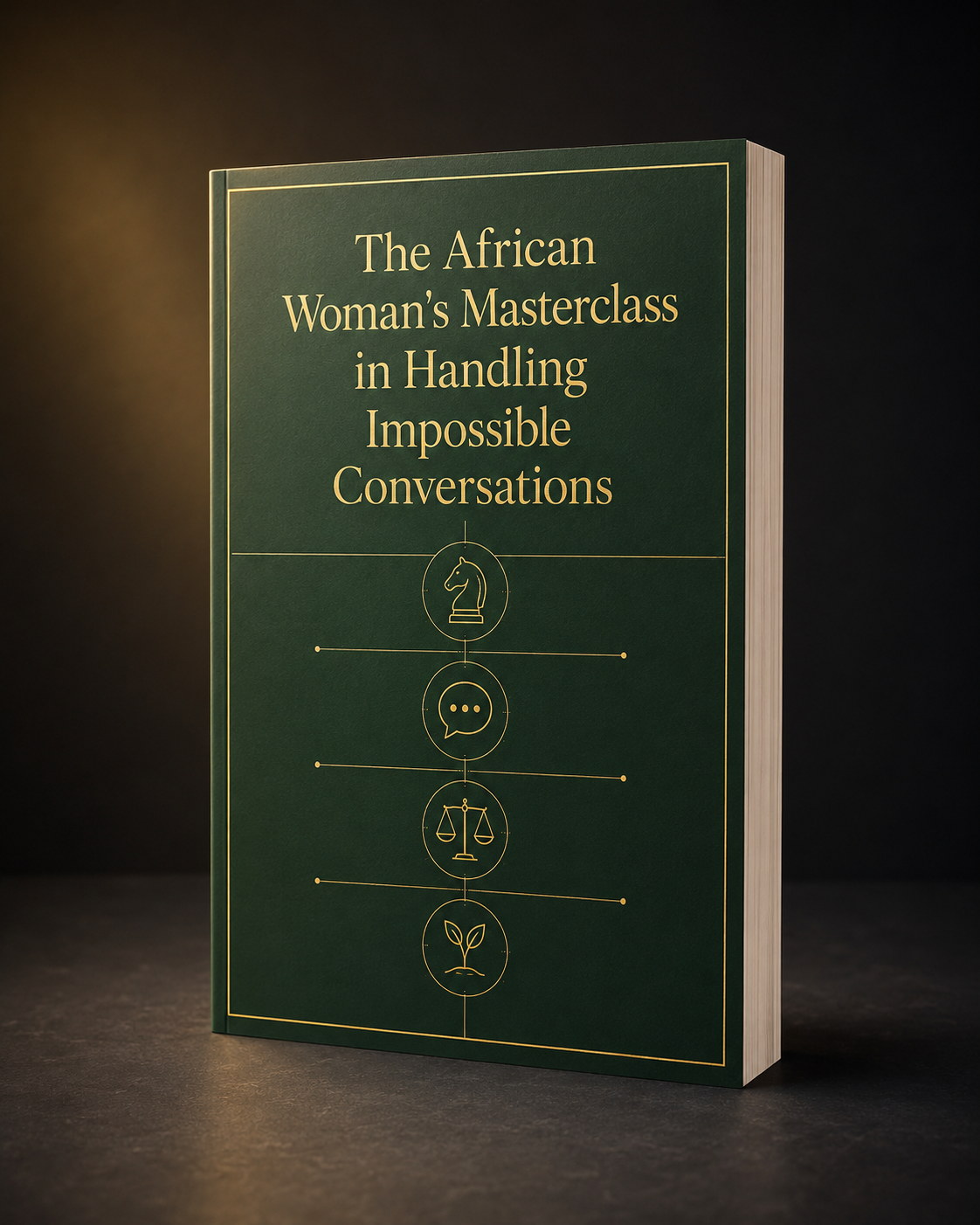
The African Woman's Masterclass in Handling Impossible Conversations
A concise written guide covering the 10 most brutal conversations African women face during and after separation, with family, with in-laws, with children, with colleagues, with the church, and the exact words to use in every single one. No rehearsing alone in the bathroom. No walking away feeling like you lost. Value: ₦12,000
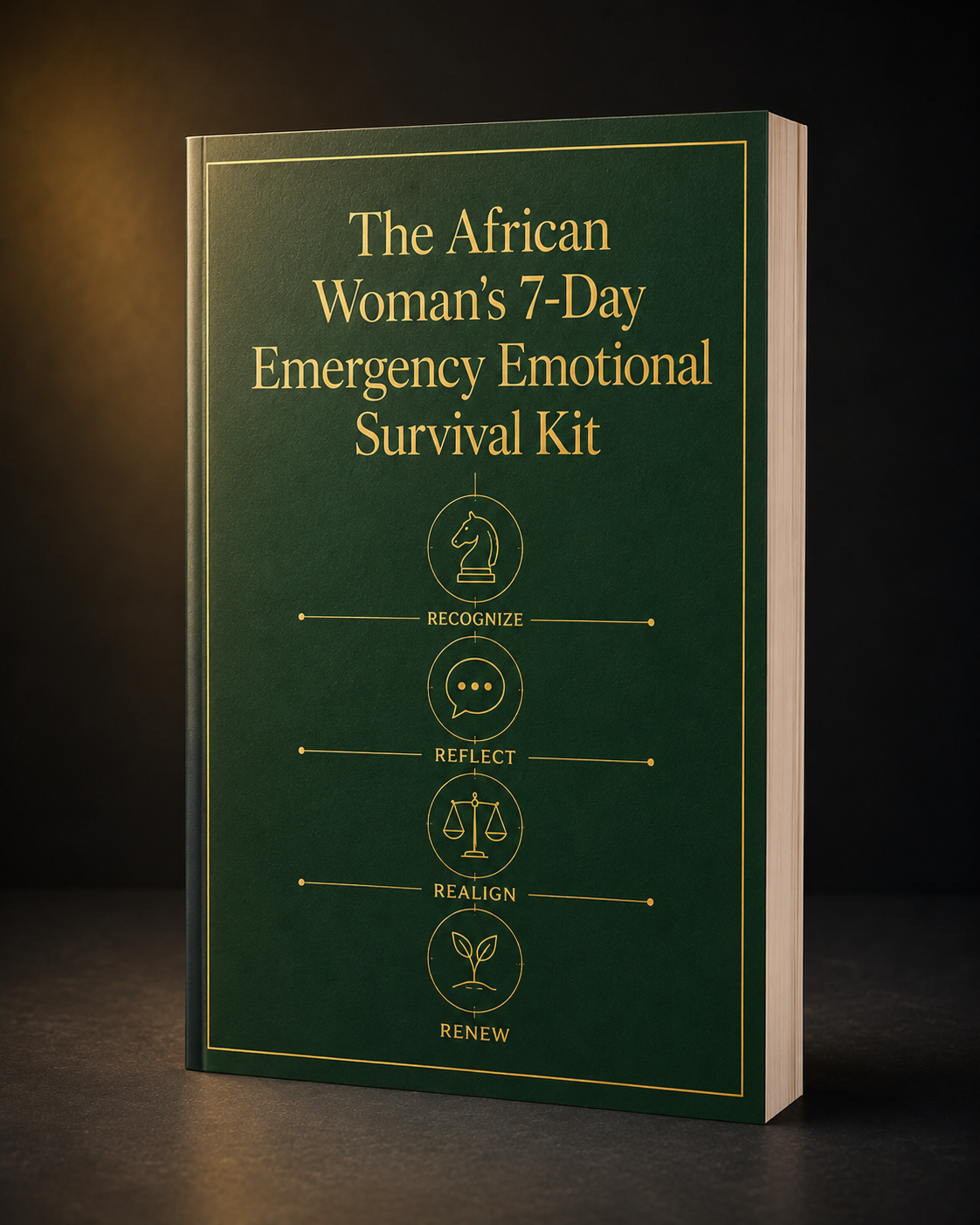
The African Woman's 7-Day Emergency Emotional Survival Kit
Seven of the hardest days you will face during your rebuild: named, anticipated, and answered. The day your family breaks you. The day you miss your children unbearably. The day you cannot get out of bed. The day you almost go back. For each one: one action, one grounding exercise, one declaration. So that no matter what type of hard day arrives, you know exactly what to do. Value: ₦7,500
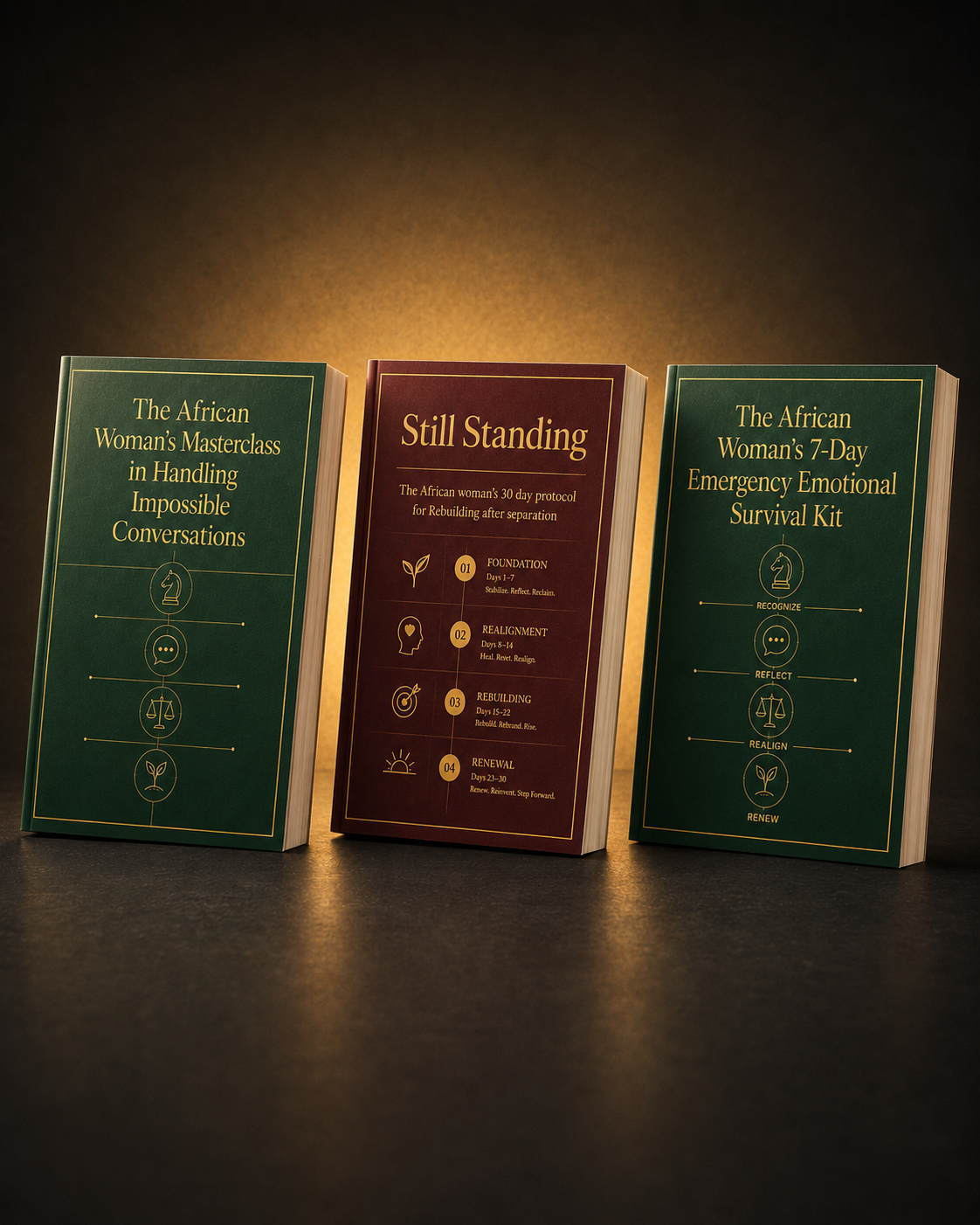
Total Value: ₦40,000+
Launch Price: ₦9,800
🔒 Secure payment in Naira · Instant PDF delivery · 14-day money-back guarantee
Join Women Across Nigeria and Africa Who Are Using Still Standing to Begin Their Rebuilding Journey
Women in Lagos, Abuja, Accra, Nairobi, London and Houston have completed this protocol. Every one of them started exactly where you are now.
200+
Women reached
30
Days to first shift
6
Countries represented
Currently available at the launch price of ₦9,800. This will increase to ₦19,800.
Launch price: ₦9,800 · Future price: ₦19,800 · Instant PDF delivery
My Bold, Risk-Free Promise to You
Still feeling unsure? I completely understand. Which is why I am making you a promise that most people would be afraid to make.
Read the guide. Complete the first exercise: the 'What I Still Have' Inventory on Page 4. Work through the first seven days of the protocol.
If you do not feel any shift within 14 days, contact me. I will refund every naira.
No argument. No interrogation. No hard feelings. No long email exchange. Just your money back.
I am not afraid of this promise because I know what happens when a woman does the work.
Your payment is 100% secure. Your PDF is delivered instantly. Your privacy is completely protected.
More Women. More Truth.
Questions You Might Have
You Have Two Options Right Now.
You get STILL STANDING. You start with Page 4 tonight. You begin the protocol tomorrow morning, one stone at a time. In 14 days, something shifts internally, something you will feel before anyone else sees it. In 30 days, you are standing in a different place than you are standing right now. Not because your circumstances have all changed, but because you have changed. And from that place, you begin to change the circumstances.
You go back to what you were doing before you came here. The scrolling. The surviving. The pretending. The family pressure you absorb without language for it. The mornings where you look in the mirror and don't quite recognise the person looking back. Maybe you find another podcast. Maybe you go back to the self-help books that don't speak your world. Or maybe, maybe you just keep going, alone, the way you have been going. And at no point does anyone write anything specifically for you, because nobody thought you needed anything specific. You were just supposed to figure it out.
You came to this page for a reason. Trust that.
The launch price is ₦9,800. It will become ₦19,800.
Tonight, you can sit in the car again.
Engine off. Lights off. Not ready to go inside.
Or you can begin rebuilding, one deliberate step at a time.
You are still standing.
Now it is time to move forward.
🛡️ 14-day money-back guarantee · Instant PDF delivery · Secure payment in Naira
Questions? Email us at hello@relationshiptalkswitheme.com
Relationship Talks With Eme — Still Standing Protocol