The Morning It Became Unbearable
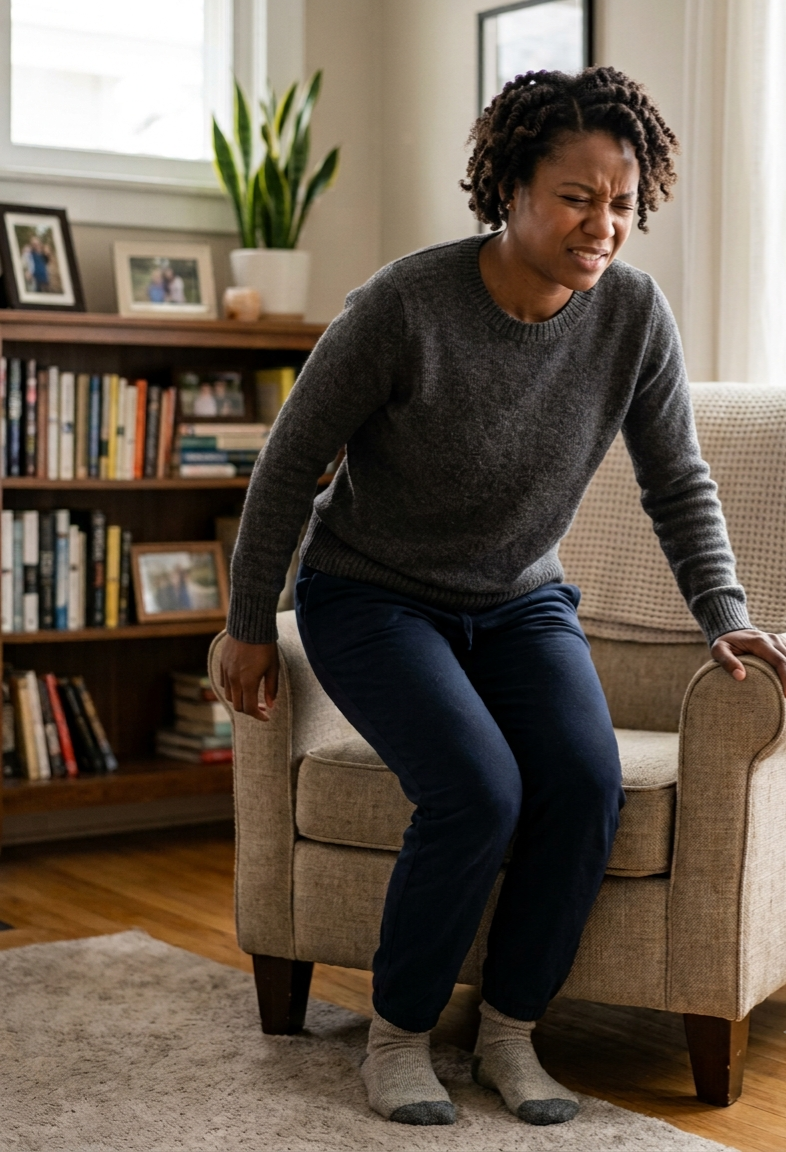
A Tuesday. 7am. The discomfort had been building for weeks, but that morning it crossed a line. I sat on the edge of the bathtub and pressed my hands to my face and breathed.
I had a 9am meeting. A presentation. Fourteen people in the room. Plastic chairs. I sat through ninety minutes on that chair while everything in me wanted to stand. I shifted every few minutes. Crossed and uncrossed my legs. Pressed into one hip, then the other. My colleague noticed. "Are you okay?" "Just my back," I said. Another small lie, the kind you get used to telling.
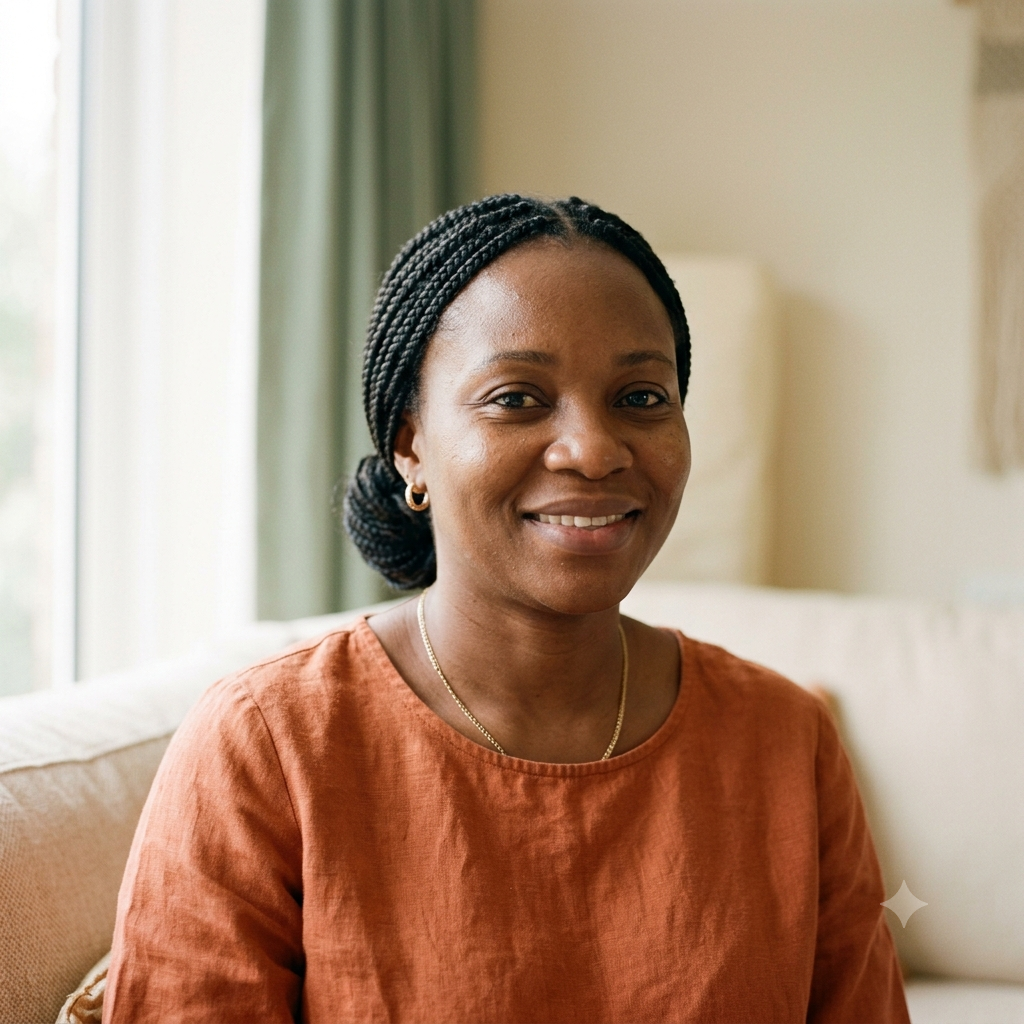
Amara O.
34. Married. Office job. Diagnosed with piles eleven months ago. Still learning to live comfortably with them — until Iye Osaro's method gave her ordinary days back.
That wasn't the first sign, though. A few weeks earlier, I'd seen it on the tissue for the first time. Red. I sat very still for a moment. And then I did the sensible thing — the thing I want to say plainly, before anything else in this story: I called my doctor that same week.
I want to pause on that, because it matters more than anything else on this page. If you are reading this with a fresh worry about blood, please make that call first, before you read another word. This is not a story about avoiding a doctor. It's a story about what happens after — after the visit, after the reassurance, after you're told, kindly, that what you have is common, ordinary, and not the thing you feared in the dark at 2am.
Because here is what nobody tells you: a diagnosis doesn't make the day-to-day any easier. The doctor confirmed it was piles. I said thank you. I went home. And I still had to sit through dinner that night. I still flinched a little when I lowered myself into a chair, and I still hadn't told my husband why I'd started keeping a cushion in my bag.
That part — the part after the diagnosis, the part you live with every single day — is the part this page is actually about.
Everything I Tried That Only Helped for an Hour
Pharmacy creams
Three different brands. ₦2,000–₦8,000 each. One burned. One gave thirty minutes of numbness. All three treated the surface, for a little while, and then I was back where I started.
Herbal mixtures from the market
Two different sellers, both certain theirs would work. ₦5,000–₦15,000. Bitter drinks, sit-baths with leaves. Some short-lived comfort. Nothing that lasted.
Warm baths and ice
The internet's favourite suggestion. Genuine relief — for about twenty minutes. Then back to normal.
Fibre supplements, taken alone
₦3,000 a month, for four months. Things got a little softer. Sitting still hurt exactly the same.
Silence
The most expensive one. Eleven months of "just tired." Eleven months of not mentioning it to anyone but my doctor, once, and never again. Silence doesn't make anything more comfortable. It just makes you more alone with it.
Total spent chasing an hour of relief at a time: well over ₦60,000. Total people I'd actually talked to about daily life with this: one — my doctor, for eleven minutes, a year ago.
The Elder Who Said: "The Cream Is Not the Whole Day"
My aunt noticed. Not the piles — the behaviour. The way I shifted at family dinners. The way I stood at the edge of gatherings instead of sitting through them. One afternoon, in her kitchen, she said gently: "I know what this is. I had it too, for three years. And Iye Osaro helped me carry it better than anything from a pharmacy ever did."
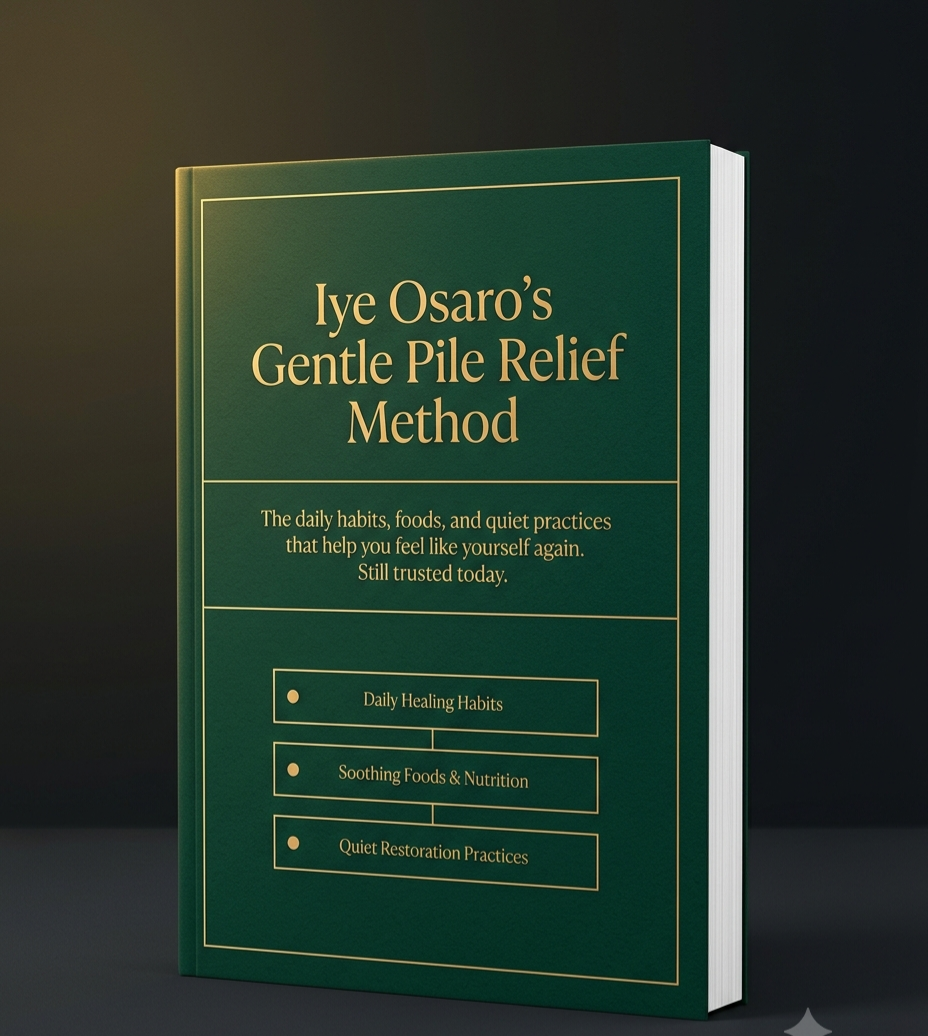
Iye Osaro. Seventy-six. An Edo elder outside Benin City. Not a doctor, and she'll tell you that herself in the first sentence you ever hear from her. A woman who has spent decades helping people live gently with the conditions they don't discuss at the dinner table.
"A cream can calm ten minutes. It cannot calm a whole day. Comfort comes from how you eat, how you sit, how you move, how you rest — the small things, repeated, until the body trusts them. That is what I teach. Not a cure. A way of living that makes the discomfort smaller, week by week." — Iye Osaro
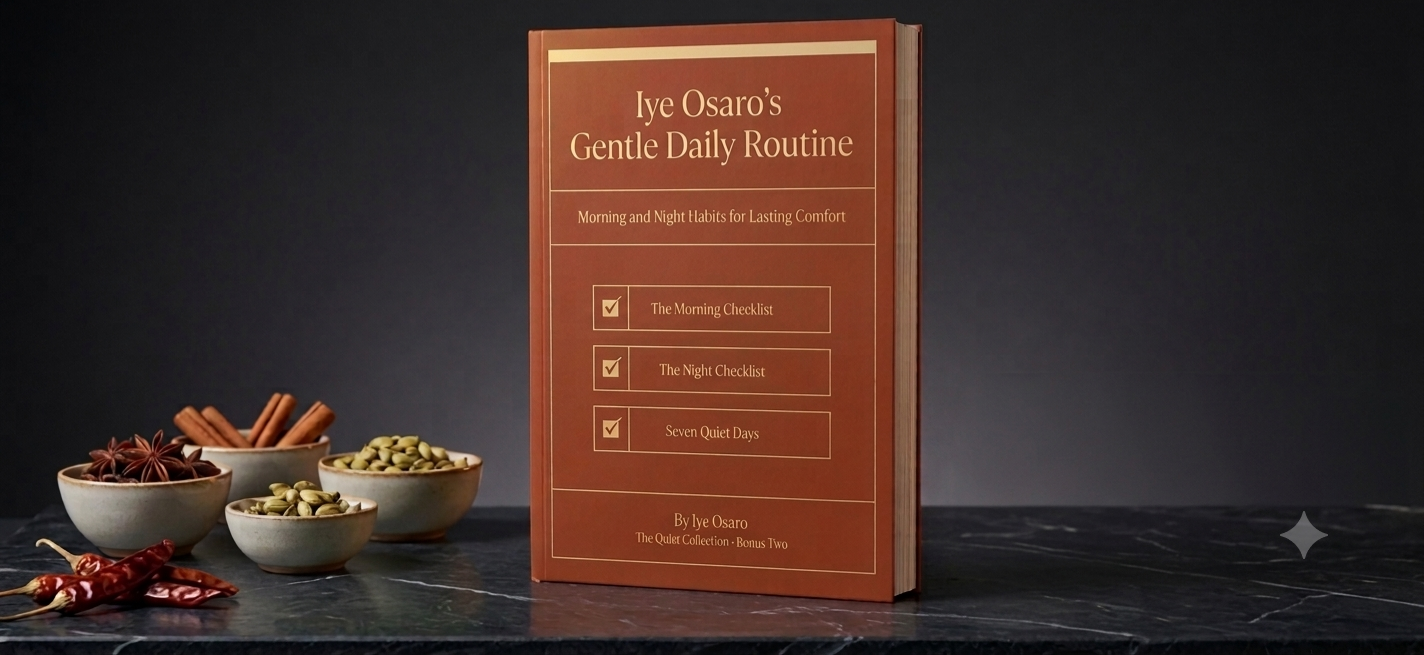
She described a simple, structured daily practice — not a drink, not a cream, a set of small habits done consistently, at home, privately, for as long as you need them. Eight things, really, done gently, one at a time.
Six of the eight, so you can see this is a routine, not a mystery. The full guide walks through all eight, plus how to build them into a day that's already full.
Nothing Changed Except How I Felt About Trying
I started on a Saturday. Ten minutes a day. Nothing dramatic happened to the piles that week. But something else changed — for eleven months I'd had no plan, just avoidance. Now I had one. And a plan, even before it shows results, changes how heavy the day feels.
I Noticed I'd Stopped Planning My Day Around a Chair
Small things. I sat down at my desk without checking which chair had the softer cushion first. The burning after a long stretch of sitting had eased from something sharp to something I barely registered. I wasn't cured. I was more comfortable, most days, and that was more than I'd had in almost a year.
I Left the Cushion at Home
Not because I'd forgotten it existed. Because I noticed, halfway through my commute, that I hadn't thought to bring it. I sat through a two-hour meeting on a plastic chair and nobody asked if I was okay, because there was nothing in how I sat to notice. That was the whole goal, and it had simply arrived.
Three weeks. Behind a locked door, ten minutes a day. Not a cure — Iye Osaro never once used that word, and neither will I. But a level of daily comfort I hadn't felt in almost a year, built from habits I still keep today.
₦9,800 (≈ $12) · 30-day comfort guarantee · refund if it doesn't help